
 Verified

What is Rose AI? How It Works, Use Cases & Alternatives AI tools are changing how businesses handle data, research, […]
What is Rose AI? How It Works, Use Cases & Alternatives
AI tools are changing how businesses handle data, research, and decision-making. One platform that is gaining attention in 2026 is Rose AI. It is designed to help users analyze large amounts of data, automate workflows, and create smarter insights without needing advanced technical skills.
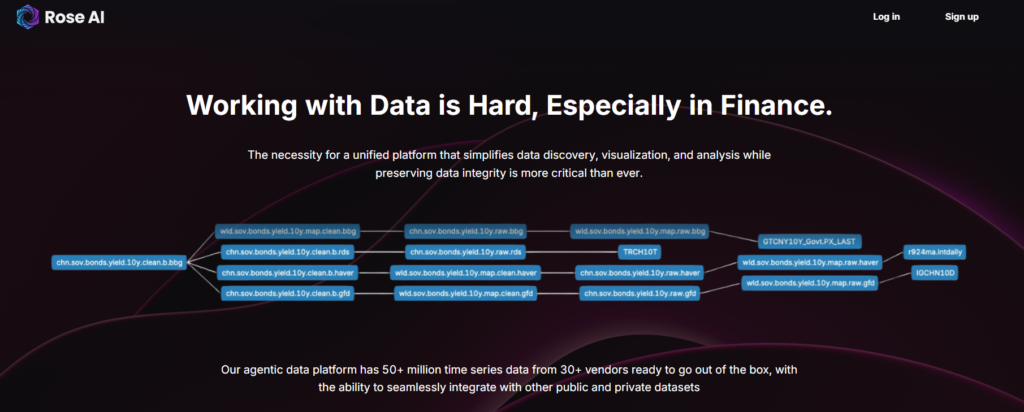
Many companies struggle with managing data from different sources. Rose AI solves this problem by combining artificial intelligence, analytics, and automation into one platform. It allows users to process information faster and make better decisions with less manual work.
Rose AI is useful for financial analysts, researchers, startups, healthcare teams, and businesses that rely on data every day. Whether you want predictive analytics, AI-powered research, or custom AI models, Rose AI offers tools that simplify complex tasks while improving speed and accuracy.
What is Rose AI?
Rose AI is an AI-powered platform built for data analysis, research automation, and intelligent decision-making. It uses advanced artificial intelligence to help users organize, process, and understand large amounts of information quickly.
The main purpose of Rose AI is to reduce the time spent on manual data work. Instead of sorting spreadsheets or collecting data from multiple systems, users can automate these tasks through AI-powered tools.
Rose AI is especially useful for businesses and professionals that work with financial data, research reports, analytics, and forecasting. It also supports natural language processing, which allows users to interact with the system using simple human language instead of complex coding commands.
In 2026, AI-driven research and analytics tools are becoming essential for companies that want faster insights and smarter operations. Rose AI fits this need by offering scalable AI solutions that improve productivity and decision-making.
How Does Rose AI Work?
Core Technology Behind Rose AI
Rose AI uses machine learning, natural language processing (NLP), and advanced analytics to process information. The platform is designed to understand user requests, analyze data, and generate useful insights automatically.
Its AI models can identify patterns, trends, and relationships in large datasets. This makes it valuable for research, forecasting, and business intelligence. The platform also supports custom AI models. Businesses can train models based on their own data and workflows.
How It Processes User Input
Users can upload datasets, connect APIs, or integrate cloud-based systems into Rose AI. The system collects and organizes the information automatically. Through NLP, users can ask questions in plain English. For example:
- “Show sales growth trends”
- “Predict next quarter revenue”
- “Analyze customer behavior patterns”
Rose AI interprets these requests and converts them into data analysis tasks.
How It Generates Output
After processing the data, Rose AI creates reports, visual insights, and predictions. Users can view charts, summaries, and recommendations directly from the dashboard. The output can also integrate with CRM systems, data visualization software, or cloud platforms for easier collaboration.
What Can You Do with Rose AI?
Rose AI offers many capabilities for businesses, researchers, and professionals. Some of the main things you can do include:
- Analyze large datasets quickly
- Automate repetitive research tasks
- Build custom AI models
- Generate predictive analytics
- Create data visualizations
- Improve business decision-making
- Connect with cloud services and APIs
- Use AI-powered NLP for easier data queries
For example, a financial analyst can use Rose AI to predict market trends. A healthcare provider can analyze patient data to improve diagnostics. A startup team can automate product research and customer analytics.
The platform is flexible enough for both technical and non-technical users. This makes it attractive for companies that want AI solutions without building expensive in-house systems.
Another strong feature is scalability. Small teams can start with simple automation, while larger enterprises can process complex datasets across multiple departments.
How Are People Using Rose AI?
Rose AI is being used across different industries in 2026.
Finance Industry
Financial analysts use Rose AI for:
- Market forecasting
- Risk analysis
- Investment research
- Predictive analytics
The AI can process huge financial datasets much faster than manual analysis.
Healthcare Industry
Healthcare providers use the platform to:
- Analyze patient records
- Identify health trends
- Improve diagnostic accuracy
- Automate medical research
This helps medical teams make faster and more informed decisions.
Research and Education
Academic researchers use Rose AI to organize research data and generate insights for studies. Universities also use it for AI-assisted research projects.
Startups and Businesses
Tech startups rely on Rose AI for customer analytics, workflow automation, and product development research. Even nonprofit organizations are using it to optimize operations and improve efficiency. Independent writers and authors also benefit from its NLP tools for content improvement and research support.
How to Use Rose AI?
Step-by-Step Guide
- Visit the official Rose AI website.
- Create an account.
- Upload your data or connect your systems.
- Choose the AI tools you want to use.
- Enter prompts or questions in plain language.
- Review AI-generated reports and insights.
- Export or integrate the results into your workflow.
Tips for Beginners
- Start with simple datasets first
- Learn the dashboard before using advanced tools
- Use templates for faster setup
- Test AI-generated insights before making business decisions
Common Mistakes to Avoid
- Uploading unorganized data
- Expecting perfect AI results instantly
- Ignoring data privacy settings
- Using unclear prompts
Clear prompts usually produce better outputs and more accurate insights.
How to Access Rose AI?
Rose AI is mainly available as a cloud-based web platform. Users can access it through:
- Web browser
- API integrations
- Cloud-connected systems
The API allows developers to integrate Rose AI into custom business applications and workflows. The platform supports integration with popular cloud services and business software. This makes it easier for companies to add AI capabilities without replacing existing systems. As of 2026, Rose AI mainly focuses on web-based access rather than standalone desktop software.
Key Features of Rose AI
Rose AI includes several powerful features for AI-driven analytics and automation.
Advanced Analytics
The platform processes complex datasets and identifies patterns quickly.
Natural Language Processing
Users can interact with the AI using normal language instead of technical commands.
Custom AI Models
Businesses can create AI models tailored to specific workflows and industries.
Seamless Integration
Rose AI works with cloud platforms, APIs, CRM systems, and visualization tools.
Data Visualization
The platform creates charts and reports that simplify complex information.
User-Friendly Dashboard
The interface is designed for beginners and professionals alike.
Scalability
Companies can expand usage as their data and operational needs grow.
Rose AI Pricing
Free Plan
Rose AI offers a free tier with limited features. This is useful for beginners and small teams testing the platform. The free plan usually includes:
- Basic analytics
- Limited AI processing
- Simple integrations
Paid Plans
The Pro plan starts at around $49.99 per month. Paid plans offer:
- Advanced AI analytics
- Custom AI models
- Better integration options
- Higher processing limits
- Team collaboration tools
Enterprise pricing may vary depending on company size and feature requirements.
Is Rose AI Worth It?
For businesses that rely heavily on analytics and research, Rose AI can provide strong value. The automation features can save time and improve productivity. However, smaller businesses may find the subscription cost expensive if they only need basic AI tools.
Rating Summary
Here is a quick rating overview for Rose AI in 2026:
- Ease of Use: 4.5/5
- Features: 4.7/5
- Pricing: 4.4/5
- Performance: 4.6/5
- Customization: 4.9/5
- Integration: 4.8/5
- Overall Rating: 4.7/5
The platform scores highly because of its flexibility, AI features, and integration support.
Benefits of Rose AI
Rose AI provides several practical advantages.
Saves Time
Automation reduces repetitive manual work and speeds up analysis.
Improves Accuracy
AI-powered systems help reduce human error during data processing.
Supports Better Decisions
Businesses can make informed decisions using AI-generated insights.
Easy Integration
The platform connects smoothly with existing software and cloud systems.
Scalable for Growth
Companies can increase usage as their operations expand.
Beginner-Friendly
The interface is easier to use compared to many enterprise AI platforms.
Limitations of Rose AI
Despite its strengths, Rose AI also has some limitations.
Learning Curve
New users may need time to understand advanced features and workflows.
Subscription Cost
The pricing may not fit every small business or freelancer.
Internet Dependency
Since it is cloud-based, stable internet access is important.
AI Output Limitations
Like many AI tools, generated insights may still require human review and validation. Businesses should not rely entirely on AI without checking results carefully.
How Accurate is Rose AI?
Rose AI is known for strong accuracy in analytics and data processing. Its advanced AI models can identify patterns and generate useful predictions quickly. The platform performs well for:
- Predictive analytics
- Research automation
- Data organization
- NLP-based queries
However, output quality still depends on the quality of uploaded data. Poor or incomplete data can reduce accuracy. In most cases, businesses report reliable performance when using structured datasets and clear prompts. The AI is especially effective in financial analysis and research-focused environments where large datasets are common.
Best Alternatives to Rose AI
Several alternatives offer similar AI-powered analytics and automation features.
Arcwise
Arcwise focuses on spreadsheet intelligence and AI-powered data workflows. It is useful for users who work heavily with spreadsheets and business analytics.
DoNotPay
DoNotPay is more focused on legal automation and AI-powered assistance for consumer tasks. It is useful for handling forms, claims, and legal processes.
DealSize.ai
DealSize.ai specializes in financial forecasting and sales analytics. Businesses use it for revenue predictions and pipeline management.
Uptrends.ai
Uptrends.ai focuses on market intelligence and trend analysis. It is commonly used by investors and financial researchers.
Each alternative serves different needs, but Rose AI stands out because of its balance between analytics, automation, NLP, and custom AI model support.
Latest Updates
In 2026, Rose AI continues to improve its analytics and AI capabilities. Recent trends include:
- Better NLP understanding
- Faster data processing
- Improved API integrations
- Enhanced AI model customization
- Smarter predictive analytics
- Improved dashboard performance
Many businesses are also using Rose AI alongside cloud-based AI workflows and enterprise automation systems. The growing demand for AI-driven business intelligence is helping platforms like Rose AI become more popular across industries.
FAQs
Is Rose AI free?
Yes, Rose AI offers a free plan with limited features. Paid plans start at around $49.99 per month.
Is it safe to use?
Rose AI includes data security and cloud integration features. However, users should still follow proper security practices when uploading sensitive data.
Who should use it?
Rose AI is useful for financial analysts, researchers, startups, healthcare teams, marketers, and businesses that work with large amounts of data.
What makes it different?
Its biggest strengths are custom AI model creation, advanced analytics, and strong integration support. The combination of NLP, automation, and scalability makes it stand out in the AI analytics market.
Conclusion
Rose AI is a powerful AI platform for businesses and professionals that need smarter data analysis and automation tools. Its combination of analytics, NLP, custom AI models, and integrations makes it valuable across many industries.
In 2026, companies are looking for faster and more efficient ways to manage data. Rose AI helps solve this problem with AI-driven workflows that improve productivity and decision-making.
While the platform has a learning curve and subscription cost, its flexibility and advanced capabilities make it a strong option for users who need reliable AI-powered analytics and research tools.
Rose AI Reviews
No reviews yet. Be the first to comment!
Best Rose AI Alternatives AI

What is BrandWell? How It Works, Use Cases & Alternatives In 2026,…

What is Paperpal? How It Works, Use Cases & Alternatives In 2026,…
What is Unreal Speech? How It Works, Use Cases & Alternatives In…
What is Keyword Discovery? How It Works, Use Cases & Alternatives Keyword…
What is Glean? How It Works, Use Cases & Alternatives Businesses now…
What is TrendSpider? How It Works, Use Cases & Alternatives TrendSpider is…

What is PDF.ai? How It Works, Use Cases & Alternatives Managing PDF…

What is Block Survey? How It Works, Use Cases & Alternatives In…
Leave a Reply